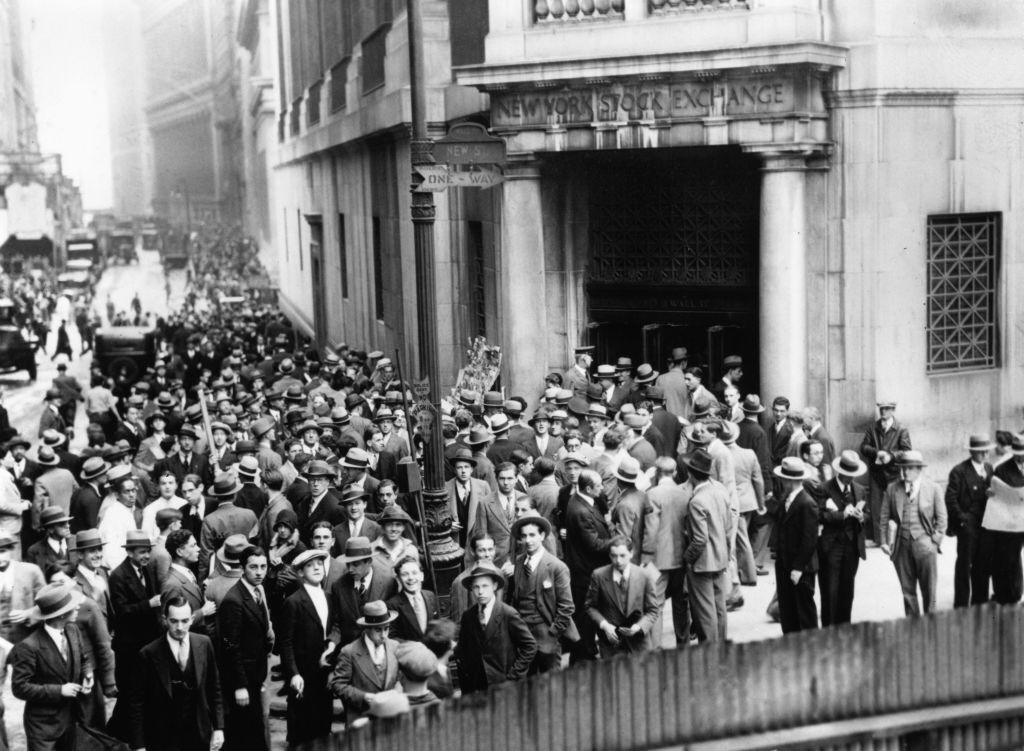
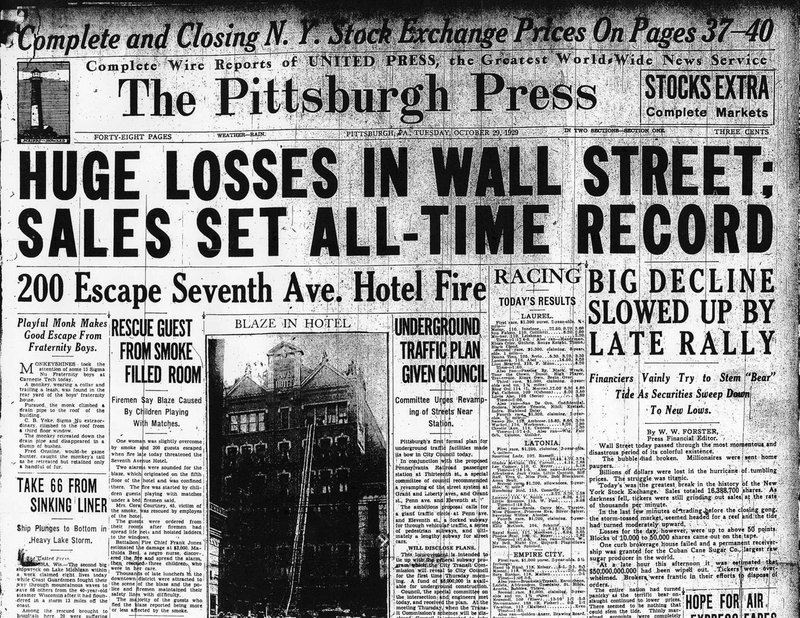
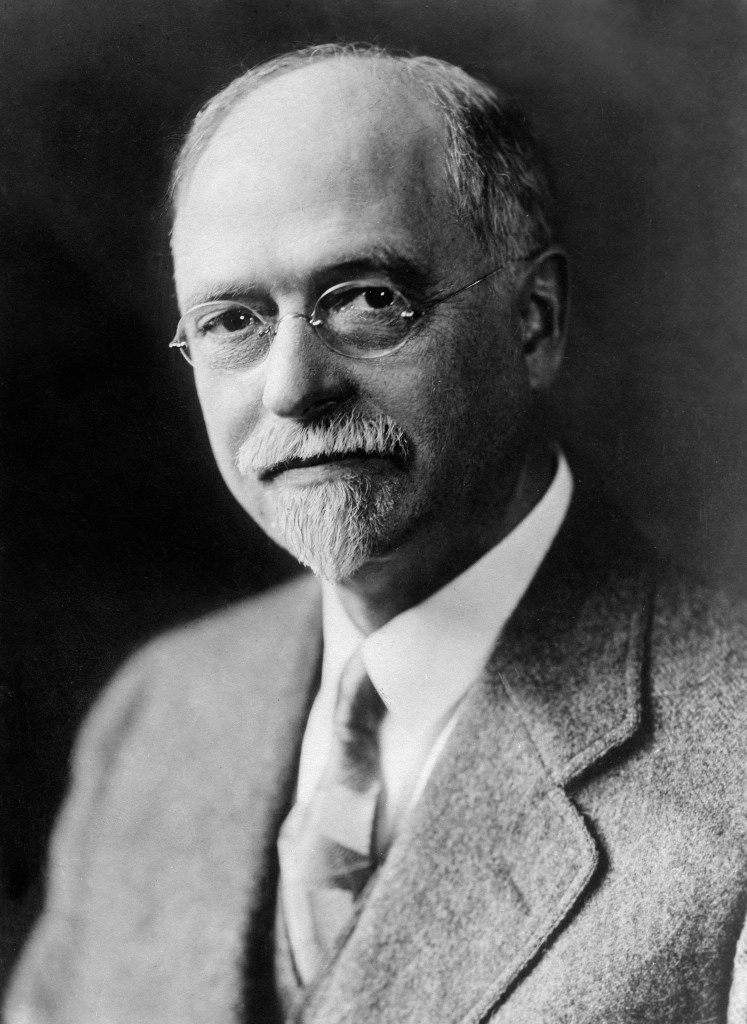
Following the high boom of the roaring twenties, something shifted and the United States faced a catastrophic collapse of its economy. During this slump it felt like America couldn’t win; the economy and was in shambles and nearly shattered. Americans felt as if they were embroiled in one crisis after another. Worse, in some ways the American Dream was no longer in reach by the common man. This economic insecurity was something Americans desperately tried to understand. Since the Great Depression, as this time has been called, the events and the choices of both government and business have been reviewed and examined to attempt to understand just what went wrong. Michael Bernstein, in 2001, suggests several factors which caused the Great Depression: The Stock Market Crash (Always Popular), Administration Policy errors (Blaming leaders for the downturn of the economy), stagnant economy that (literally frozen assets refusing to move around). All are compelling arguments. However, nearly 70 years prior to Bernstein, an economist addressed this event in real time. Irving Fisher in 1932 offered a comprehensive look at the causes of the Great Depression.
Fisher was a leading economist when the Depression took hold and produced several books and lectures that identified root causes and proposed economic solutions. His insight and influence are still felt today as others explore this tragic time in American History.1 His book, Booms and Depressions: Some First Principles, notes nine main factors that led to the Great Depression. His book is a fascinating read, and I tend to agree with the concepts, but for conciseness I just want to highlight 3 of his factors (the three most important in my non-economics opinion).
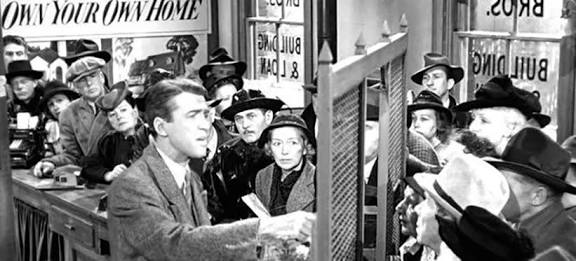
The first factor I looked at was “Volume of Currency.”2 Listed as the 2nd factor of nine, Fisher indicates that the very act of liquidating a person’s deposits depletes the banks’ ability to float or offer credit into the market. As Fisher explains the local deposit of a personal note, (promissory) will not in itself circulate around the business area, I take this to be city state or nation, but the banks’ ability to circulate promises is what is actually traded. I think George Bailey explained it best when he told his customers their cash was not just in the safe but also in the mortgage of their neighbor’s houses.3
This fact means that when there is a literal run on the bank, the banks have no funds to promise others and the cascade effect builds until the physical money is gone. It should be noted that Fisher discusses the idea of the money illusion, a fact where people look through (my emphasis) money rather than think of it as a measurable tangible thing.4 The question then becomes what measures the measuring dollar/ to this point while I consider volume of currency as a main issue of the Great Depression, Fisher points out that this is volume of currency is a byproduct of what the actual problem is-the “dollar disease” or falling prices.5
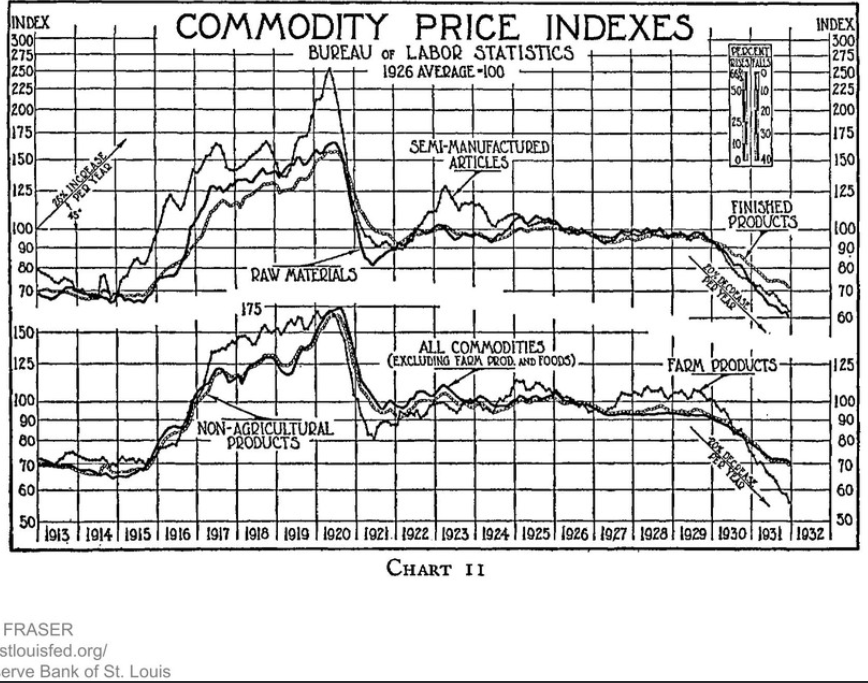
The second factor I wish to investigate is Fisher’s “Production Trade and Employment” factor.6 Listed as the 6th Factor, this is directly proportionate to the labor force and the wages that can be dispersed or spent. As the ability to purchase goods wains, the demand goes down, therefore there is less need for production, which in turn needs to decrease the labor force, the cycle continues. This cycle is constantly being examined to better understand economic flow. Within the production factor the idea of construction-building becomes a first warning sign, when construction abruptly stalls, or abruptly increases, it becomes a tangible indication of the health of a market. This concept can be seen during FDR’s New Deal programs where he “hired” workers through the Civilian Conservation Corps (CCC) and the Civil Works Administration (CWA) to build things and establishing national parks. These places are still used today for concerts, reflection and recreation.7
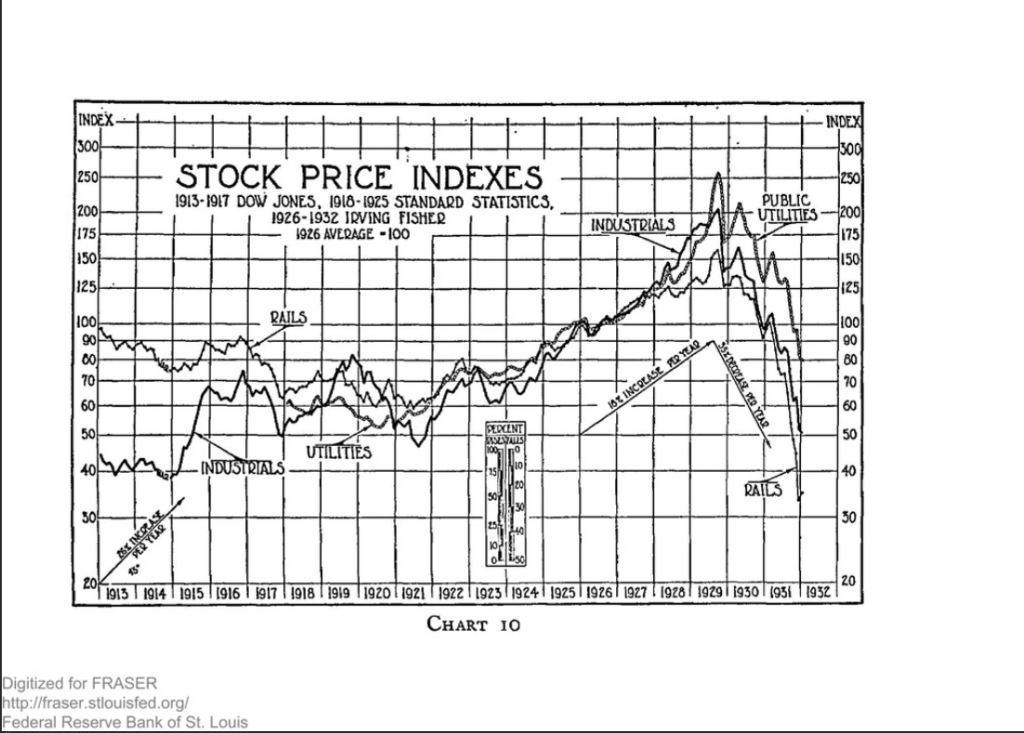
The third factor I want to highlight is the psychological toll and negative impacts of seeing storefronts close and the stress of not providing for one’s family. Listed as the 7th factor; Fisher defines this as “Increased pessimism and loss of confidence”.8 On the surface this seems to be a simple concept to understand, as things get worse, people continue to lose hope and the vicious cycle of hard days and fears of tomorrow spread throughout the populace. Even those with relatively “safe” income sources can feel the strain of distress. In fact, Fisher acknowledges that the term “distress selling” validates the presence of distress.9 This fact seems a simple concept, but I think grace should be shown here as they are trying to wrap their minds around a problem that at the time seemed to have no answer. So psychologically speaking, depression is as much a state of mind as it is a measurable business term. Philosophically, Fisher suggests that even the coolest of heads are not totally immune to irrational fears that force people to make abnormal choices.10

So, when looking at the evidence, one major theory of why the Great Depression happened started with a lack of faith. Faith in their fellow man, faith in their government, faith that the next day would be better. Such depressive thoughts created a situation where people fought for self-preservation any way they could. In the heart of this depression, Fisher presented a theory of why the economic downturn was happening, the volume of currency, dictated by not just the number of coins and bills in circulation but the perceived value of such monies. Added to this was the reality of production levels, that rise and fall with demand and are especially sensitive to market changes. Topping it all you have the dual impact of the psychological toll of facing the daunting task of mere survival and a sense of hopelessness that declares there is no way out. This state affects the pride of men, the stoic resolve of women and even dampers the laughter of children. When the focus becomes one of survival, a community or society can think on little else.
Having had a cursory look at the Great Depression; turn with me to the solution. How did America “end” the great Depression? Did the Depression really end? The answers are as complex as they are straightforward.
Solutions?
Looking at the factors of the great depression, it is enlightening to see how some of the more pressing aspects were addressed. I have already mentioned the CCC and CWA programs brought about by FDR’s new deal, and the country still bears the memories in concrete and stone of those toiling away for years attempting to rebuild the nation. As Fisher suggests, production increases and therefore profit increases, and then money increases. Slowly but increase it does. The policies FDR put in place no doubt helped start America’s return, however the start of WWII lit the match that turned into a roaring flame of American ingenuity and production might. Bernstein declares that the war in Europe was already having a positive effect on the labor force.11
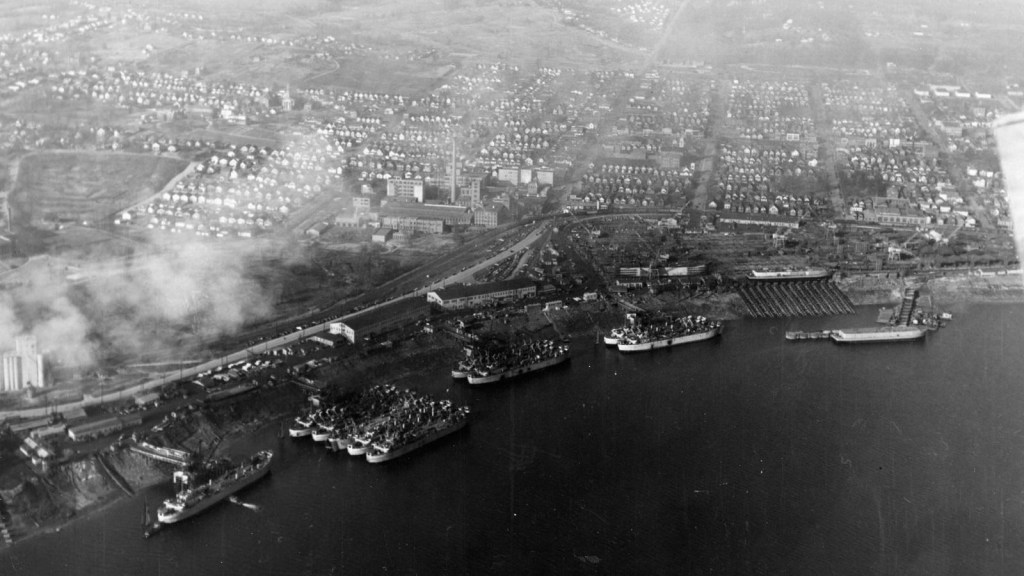
This was one factor, as the war effort had two other important consequences. First, the war united the country in a single-minded goal, from scrap collection to factory work, to the willingness for rationing programs, America was focused on producing things for the war effort. I am not implying that economy was restored over night, but I am saying the economy was more positive than negative. Second, the war created a sense of rationing and saving. Even when money was had there was nothing to do but save it. Manufacturing was dedicated to the National war effort so what products were available were rationed. Aside for rationing, the government instituted “price caps” literally holding companies to a standard to discourage price gouging. While anticapitalistic in its design, the short-term solution helped create a bubble of wealth waiting to be exploited when the government opened the floodgates after the war was over. Once the dust settled the American people breathed a little and returned to a consumer/capitalist ideology. The answer is then simple, the country slowly began to get back to work, building and constructing, moving previous stagnant men and women toward a working future, when WWII drew America to the world stage again. Sadly, War is good business, and business was good for America and the thousands of small towns activated to produce for the warfront.12
- SAMUELSON, ROBERT J. “Revisiting the Great Depression.” The Wilson Quarterly (1976-) 36, no. 1 (2012): 36–43. http://www.jstor.org/stable/41484425. 4 ↩︎
- Fisher, 14. ↩︎
- It’s a Wonderful Life, directed by Frank Capra, (Beverly Hills, CA. Liberty Films, 1946), DVD. ↩︎
- Irving Fisher, Booms and Depressions: Some First Principles. New York: Adelphi Publishers 1932 https://fraser.stlouisfed.org/title/booms-depressions-104?page=53, 18. ↩︎
- Fisher, 27. ↩︎
- Fisher, 30. ↩︎
- National Park Service, “CCC Properties listed in the National Register of Historic Places” last update Sep 12, 2024, https://www.nps.gov/articles/ccc-properties-listed-in-the-national-register-of-historic-places.htm ↩︎
- Fisher, 34. ↩︎
- Fisher, 32. ↩︎
- Fisher, 33. ↩︎
- Michael A. Bernstein, “The Great Depression as Historical Problem.” OAH Magazine of History 16, no. 1 (2001): 3–10. http://www.jstor.org/stable/25163480. 9 ↩︎
- One of those towns is my hometown of Evansville Indiana, whose production output was among the highest during the war. ↩︎


Leave a Reply